Showing posts with label #PBColorMyWorld. Show all posts

Friday, June 30, 2017

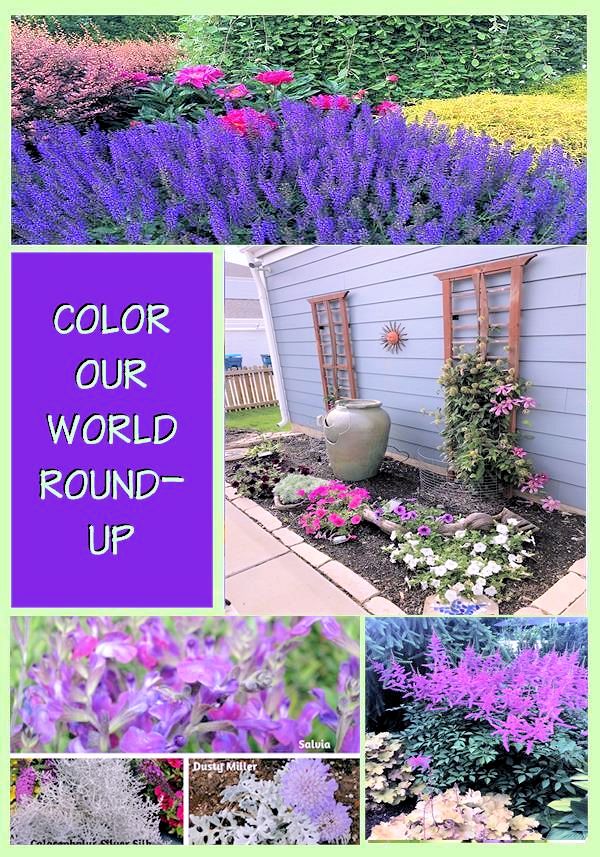
Color Our World Round Up June: Purple Blooms for Your Garden and the Folklore Behind Them

Color Our World Purple!
Welcome! It's time for another Color Our World Round-Up post. Each month the knowledgeable bloggers from Project Beautiful get creative by writing articles with focus on a particular color. The month of June is all about the color purple! Purple is considered a cool and calming color in the garden and has been viewed as  a symbol of royalty and heroism throughout cultural history. To enjoy reading all about the color purple, simply click on the links below to further view each article.

First up is Terri Steffes, from Our Good Life. Terri discusses how she uses the color purple in her garden as an accent, and includes some interesting folklore behind the use of purple throughout history. In her article Color My World Purple, she mentions that "Purple is such an interesting color, because it is rarely seen in nature. It's the most powerful wavelength in the rainbow, akin to x-rays and gamma rays.  It is very likely our prehistoric ancestors never even saw the color purple, because it is so rare in nature. 

In my garden, I like to use purple as an accent. The rich colors are perfect with the lighter yellows and pinks that I also like to use. I really enjoy the rich purples of the Wave petunia. The regular Wave comes in purple classic and misty lilac, both which I used in my garden.  We also love clematis, which usually bears a purple blossom, although they do come in other colors." Read more here.


Next,  Susan Brandt from Blooming Secrets shares her views on combining the colors purple and silver in the garden with her article Color Combos: Purple and Silver. "Throughout history, the color purple has been associated with royalty. During the time of ancient Rome it was the color of the robe worn by the Caesars and today it is still used by the British Royal Family as a ceremonial color on very special occasions. Silver is the color of prestige. As a precious metal, it symbolizes riches and wealth. Purple and Silver are distinctive colors and they are equally unique in the garden. In my opinion, when combined together in a container on a deck or in a hanging basket on a porch, Purple and Silver represent “garden elegance”! Read more here.

Lynne Cherot from Sensible Gardening delights us with her post Purple in the Garden. "When I am an old woman I shall wear purple” the famous first line of English poet Jenny Joseph’s poem “Warning”. The years tick by quickly and I’m not quite at that point in my life so I probably won’t be wearing purple any time too soon, however that doesn’t mean I can’t have it in my garden. The meaning of purple is good judgment. Purple is a combination of red and blue, the warmest and coolest colours, symbolizing magic, mystery, royalty, creativity and the spiritual. It’s been suggested that you should wear purple when you want to encourage fantasy and imagination. Purple flowers have an enchanted, elegance to them and some of the most beautiful and delicate flowers are purple." Read more here.

Finally, here is my post This Month's Color In the Garden: 12 Shades of Purple Blooms for your Garden! "Welcome to This Month's Color in the Garden! Throughout history, the color purple has been associated with royalty, dignity, grandeur, devotion, peace, pride, nobility, luxury, and power. Throughout history, purple robes have been worn by royalty, and many believe this came to be due to the rare occurrence of purple in nature, making the dye expensive to create. Purple represents nobility, as in the Purple Heart awarded by the The United States Military to soldiers wounded in battle and In Thailand, purple is the color of devotion and peace for mourning widows. The lighter shade of purple, or lavender, has long been associated with beauty and femininity. And finally, in landscape design, purple is considered a cool, peaceful and calming color, which is wonderfully complemented by the warmer and more fiery shades of yellow and orange. Here are 12 shades of purple blooms to carry you throughout the gardening season." Read more here.

Thank you for visiting and I hope you enjoyed #PB Color Our World Round-Up for the month of June. If you are enjoying these monthly Round-Ups, please leave a comment, and do share your thoughts about the color PURPLE! Also, be sure to visit these wonderful bloggers regularly for their inspiring articles on gardening, home remedies, DIY projects, decorating, culinary delights and more! I am also linking to Floral Friday Fotos. Check out their weekly meme! Lastly, be sure to check out my two books on Amazon, featuring landscape design principles, feature gardens, plant combinations and maintenance tips, along with a dash of inspiration! 

MY BOOKS ON AMAZON:


As Always...Happy Gardening!

Author: Lee@A Guide to Northeastern Gardening, © Copyright 2017. All rights reserved


Monday, December 5, 2016

This Month's Color in the Garden: December 2016-The Power of Red in the Landscape

The Power of Red in the Garden Clockwise Left to Right: Dahlia, Landscape Architectural Element, Dahlia, Winterberry and Knock Out Rose (center)
In landscape design and architecture, the color red tends to dominate when compared to other colors. Red tends to make a strong, dramatic statement and creates an illusion of boldness and depth. Red can be used to brighten a space in all seasons, including winter, with the incorporation of architectural elements or perhaps some berry producing shrubs in the garden against a white snowy background. Red foliage creates striking contrast in spring throughout fall, and red flowers, especially tubular-shaped ones, are an attraction to hummingbirds and other pollinators. The color red will have a lot more impact in your garden when used sparingly, and is nicely complemented by the the color green, which is considered neutral.

Nandina domestica berries
Examples of red blooms in the landscape include Red Knock Out Rose, Tulips, Peony, Zinnia, Dahlia and Lobelia cardinalis (Cardinal flower). Red berry producing plants include Nandina domestica, Winterberry, Holly, Skimmia and some varieties of viburnum. Plants exhibiting red or maroon foliage include Heuchera ‘Palace Purple' (Coral Bells), Weigela Spilled Wine, and annuals such as Coleus, Impatiens and Begonia. The most prominent red in the garden that keeps coming to mind is that of the traditional red rose.

Red Knock Out Rose 'Radrazz'
Roses have been grown throughout civilization and are a timeless tradition, speaking the language of love, beauty, courage and respect. Historical evidence shows they were grown in China about 5,000 years ago, and have carried their special meaning ever since. A deep red rose can be used to convey heartfelt regret and sorrow. or twelve red roses conveys "Be mine" and "I love you. The red rose began its history during Greek and Roman times, where it was tied to Aphrodite, or Venus, the mythical goddess of love, who was often seen with roses around her head and covering her feet and neck. The red rose throughout time has symbolized an immortal love that could never fade, even through time or death. In early Christianity, the rose became associated with the virtue of Virgin Mary and in the Tarot it has been considered a symbol of balance, promise, new beginnings, and hope. In Shakespeare's writings, roses had become a poetic standard throughout his works. Throughout its history, the red rose continues to hold its status as the ultimate symbol of affection. Other flowers and their meanings include red Amaryllis, a statement of splendid beauty and pride, red aster which symbolizes patience, Anthurium symbolizing happiness and hospitality and poinsettia symbolizing good cheer and success. 

Architectural Elements Old Westbury Mansion Long Island
In landscape architecture the color red is often used to draw attention or create a focal point, as in the use of red brick for walkways, labyrinths, benches or perhaps some red Adirondack chairs to highlight a sitting area. Estate gardens are known for their mass plantings of red tulips, dahlias and rose covered arbors. In color theory, red tends to make a space look smaller and can be used to make a large space seem more intimate. Red brick also brings to mind thoughts of mansions from colonial time, and can be implemented in modern day to create an old world feel. 
Clockwise Left to Right: Red Knock Out Rose, Dahlia, Tulips, Nandina 'domestica', Amaryllis (center)
Do you have any design or architectural elements in your space that are red and if you do, when and where are they most prominent? I invite you to share whatever shades of red you have going on in your garden in the comments below, whether it be in the form of plants or otherwise. I hope you enjoyed "This Month's Color in the Garden". I'm already thinking about next month's theme, which is the color white! Next up is Garden Bloggers' Bloom Day & Foliage Follow-Up on the 15th. and Color Our World Round Up on the 30th. 
For more on Garden Design-My Books on Amazon:

A Guide to Northeastern Gardening
Landscape Design Combinations

As Always...Happy Gardening!

Author: Lee@A Guide to Northeastern Gardening, © Copyright 2016. All rights reserved.