Showing posts with label #PBColorOurWorld Round-Up. Show all posts

Friday, June 30, 2017

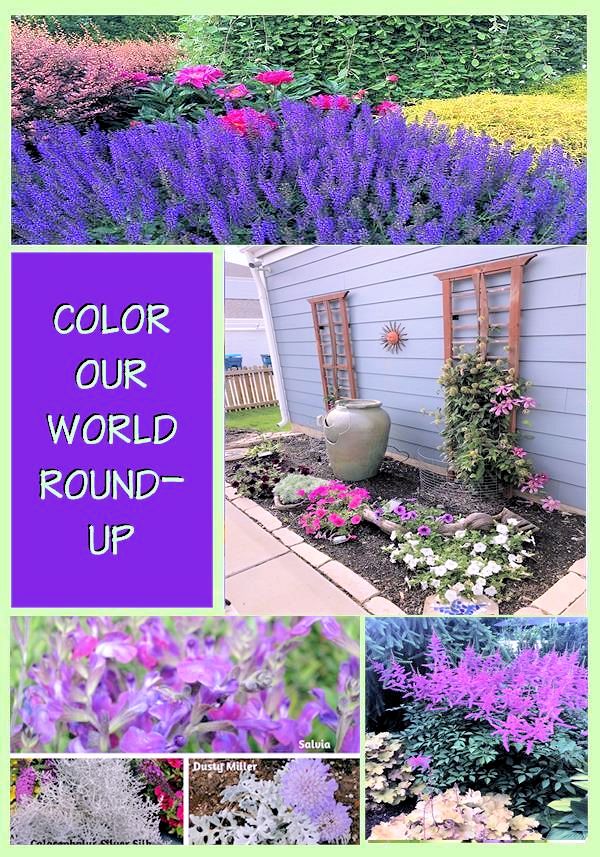
Color Our World Round Up June: Purple Blooms for Your Garden and the Folklore Behind Them

Color Our World Purple!
Welcome! It's time for another Color Our World Round-Up post. Each month the knowledgeable bloggers from Project Beautiful get creative by writing articles with focus on a particular color. The month of June is all about the color purple! Purple is considered a cool and calming color in the garden and has been viewed as  a symbol of royalty and heroism throughout cultural history. To enjoy reading all about the color purple, simply click on the links below to further view each article.

First up is Terri Steffes, from Our Good Life. Terri discusses how she uses the color purple in her garden as an accent, and includes some interesting folklore behind the use of purple throughout history. In her article Color My World Purple, she mentions that "Purple is such an interesting color, because it is rarely seen in nature. It's the most powerful wavelength in the rainbow, akin to x-rays and gamma rays.  It is very likely our prehistoric ancestors never even saw the color purple, because it is so rare in nature. 

In my garden, I like to use purple as an accent. The rich colors are perfect with the lighter yellows and pinks that I also like to use. I really enjoy the rich purples of the Wave petunia. The regular Wave comes in purple classic and misty lilac, both which I used in my garden.  We also love clematis, which usually bears a purple blossom, although they do come in other colors." Read more here.


Next,  Susan Brandt from Blooming Secrets shares her views on combining the colors purple and silver in the garden with her article Color Combos: Purple and Silver. "Throughout history, the color purple has been associated with royalty. During the time of ancient Rome it was the color of the robe worn by the Caesars and today it is still used by the British Royal Family as a ceremonial color on very special occasions. Silver is the color of prestige. As a precious metal, it symbolizes riches and wealth. Purple and Silver are distinctive colors and they are equally unique in the garden. In my opinion, when combined together in a container on a deck or in a hanging basket on a porch, Purple and Silver represent “garden elegance”! Read more here.

Lynne Cherot from Sensible Gardening delights us with her post Purple in the Garden. "When I am an old woman I shall wear purple” the famous first line of English poet Jenny Joseph’s poem “Warning”. The years tick by quickly and I’m not quite at that point in my life so I probably won’t be wearing purple any time too soon, however that doesn’t mean I can’t have it in my garden. The meaning of purple is good judgment. Purple is a combination of red and blue, the warmest and coolest colours, symbolizing magic, mystery, royalty, creativity and the spiritual. It’s been suggested that you should wear purple when you want to encourage fantasy and imagination. Purple flowers have an enchanted, elegance to them and some of the most beautiful and delicate flowers are purple." Read more here.

Finally, here is my post This Month's Color In the Garden: 12 Shades of Purple Blooms for your Garden! "Welcome to This Month's Color in the Garden! Throughout history, the color purple has been associated with royalty, dignity, grandeur, devotion, peace, pride, nobility, luxury, and power. Throughout history, purple robes have been worn by royalty, and many believe this came to be due to the rare occurrence of purple in nature, making the dye expensive to create. Purple represents nobility, as in the Purple Heart awarded by the The United States Military to soldiers wounded in battle and In Thailand, purple is the color of devotion and peace for mourning widows. The lighter shade of purple, or lavender, has long been associated with beauty and femininity. And finally, in landscape design, purple is considered a cool, peaceful and calming color, which is wonderfully complemented by the warmer and more fiery shades of yellow and orange. Here are 12 shades of purple blooms to carry you throughout the gardening season." Read more here.

Thank you for visiting and I hope you enjoyed #PB Color Our World Round-Up for the month of June. If you are enjoying these monthly Round-Ups, please leave a comment, and do share your thoughts about the color PURPLEAlso, be sure to visit these wonderful bloggers regularly for their inspiring articles on gardening, home remedies, DIY projects, decorating, culinary delights and more! I am also linking to Floral Friday Fotos. Check out their weekly meme! Lastly, be sure to check out my two books on Amazon, featuring landscape design principles, feature gardens, plant combinations and maintenance tips, along with a dash of inspiration! 

MY BOOKS ON AMAZON:


As Always...Happy Gardening!

Author: Lee@A Guide to Northeastern Gardening, © Copyright 2017. All rights reserved


Thursday, March 30, 2017

Color Our World Round-Up March: The Many Roles of Green in the Garden!

Banner Credit: Terri Steffes from Our Good Life
Welcome! It's time for another Color Our World Round-Up post. Each month the knowledgeable bloggers from Project Beautiful get creative by writing articles with focus on a particular color. Posts cover a multitude of topics including gardening, home remedies, decor and culinary delights. March is the month of "green", which is very fitting with the arrival of St. Patrick's Day and spring! The authors are sharing their thoughts on all the possibilities and uses of green in the garden, and not just for spring, but all year round. Simply click on the links to read each article in full.

First up for our March Round-Up is Lynee Cherot from Sensible Gardening with her delightful post on the Unexpected Green Flower. "As much as I love the riot of color in a garden, I’ve lately become intrigued and attracted to the sophistication of the uncommon green flower. The color green is prominent in nature, usually in foliage, but quite unusual as a flower color. The green of plants is produced by chlorophyll, which converts light into energy the plant can use for growth. Colorful blooms serve as attractors for pollinators which will spread the plants pollen for reproduction. Green flowers have no need for bright colors as they reproduce themselves through asexual reproduction or rely on the wind to spread themselves around." See all the various types of green blooms with their descriptions here...

Next is Susan Brandt from Blooming Secrets, who brings thoughts of green all year round with The Year in Color: Wearing of the Green. "Green seems like a most appropriate color for the month of March. In many areas of the country the grass starts growing and by the end of the month, the first official “mowing of the lawn” occurs. The Daffodils that we planted last fall begin to make an appearance and the first green shoots on many trees and shrubs become the first leaves of spring. Finally, the “wearing of the green” on St. Patrick’s Day lets us know that spring is literally right around the corner and that the “long winter’s nap” for our garden is coming to an end. Green truly takes “center stage” in the spring; the lawn and leaves dominate the early landscape, but there are other signs that green isn’t just limited to grass, shrubs and trees." Read more about the use of green in the garden here...

Garden and food blogger Terri Steffes from the Good Life shares her knowledge of how to plant a Salad Bowl Garden with her post Time to Plant the Salad Bowl! "One of my favorite spring activities is to plant the Salad Bowl.  The Salad Bowl is a huge planter that I sow several kinds of lettuce, spinach, kale and swiss chard.  It is time to plant it and I am looking forward to eating fresh greens in a few weeks! Tip #1  To speed up the process, I plant a few plants as well as seeds.  That way my crop is spread out and I get a longer run of greens.  Last year's crop was wonderful, as you can see in the picture below. Tip # 2  Use good seeds!  This year we are planting using heirloom seeds that we purchased from the Missouri Botanical Gardens.  They have a wonderful seed selection and I am eager to see if we can tell the difference between the seeds we get at the Dollar Store and the seeds were purchased from MoBot. Tip #3 We will plant 2 or so weeks before the last frost.  The soil does best when it is above 60 degrees. Sometimes we've guessed wrong about the last frost and still have had a good crop of greens. When someone tells me that they want to start gardening, this is what I tell them to start with! The seeds germinate quickly (usually within 5-10 days) and you can eat the ones that you thin out in a salad!" Read up on more salad bowl gardening tips here...

Green is a major color in Japanese Garden design. Here is my post, This Month's Color in the Garden: The Role of Green in Japanese Garden Design. "When I think of a predominately green garden, Japanese Garden style comes to mind. The color green has been a basic element in Japanese garden design over the centuries and has also been an element found in both formal and informal gardens throughout horticultural history. Greenery provides architecture in the landscape in the form of hedges, trees, shrubs, grass and moss. The color green is a neutral color, one that can be used with any other color without changing the desired effect for a space. It is the perfect combination of the basic primary colors yellow (warm, energizing) and blue (cool, calming) creating a perfect balance. Conifers which are commonly used in Japanese Garden design provide soothing shades of green and grow in a variety of structural forms for year-round interest. In Japanese Garden design, evergreens are used for their simplicity, ability to mimic the natural landscape, and to provide structure all year round. Typical plant species used in Japanese Gardens are juniper, Hinoki Cypress, pine, bamboo, maple, cherry, azalea, camellia, and iris. Moss is another element that has especially played a major role in Japanese garden design, and is regarded as a symbol of harmony, age, and tradition." Read more about Japanese Garden design here...

My Author Page
Thank you for visiting and I hope you enjoyed #PB Color Our World Round-Up for the month of March. If you are enjoying these monthly Round-Ups, please leave a comment, and do share your thoughts about the color GREEN!

Also, be sure to visit these wonderful bloggers regularly for their inspiring articles on gardening, home remedies, DIY projects, decorating, culinary delights and more! I am also linking to Floral Friday Fotos. Be sure to check out their weekly meme!

NEXT UP is This Month's Color in the Garden on the 7th, where it's all about the color yellow. Then, join me for Garden Bloggers' Bloom Day and Foliage Follow-Up each month on the 15th, and Round Up posts at the end of the month! 

Author: Lee@A Guide to Northeastern Gardening, © Copyright 2017. All rights reserved