Showing posts with label summer blooming annuals. Show all posts

Tuesday, October 1, 2019

This Month in The Garden: New Introductions for 2020 from the Growers at Proven Winners!

This Month in the Garden: New Plants for 2020!
Welcome to This Month in the Garden for September! Today's post will introduce you to some of the spectacular additions that will be joining the Proven Winners family of plants for 2020! I have had the pleasure of trying them out in my own garden this past summer and look forward to their availability on the market for next year. Come along and see what's new!

Magic Show 'Enchanted Indigo' Verbena

Hardiness Zones 4-8 (Perennial)
Exposure: Partial to Full Sun
Bloom Season: Summer-Fall
Mature Size: 16-18 inches

Magic Show 'Enchanted Indigo' Verbena impressed me from the start with its spikes of violet-blue blooms that last throughout summer with just a little bit of deadheading. The compact size makes its perfect for the front of a perennial border. I am looking forward to seeing this one in the garden year after year.

 Bright Lights Berry Rose African Daisy Osteospermum

Hardiness Zones 9-11 (Annual)
Exposure: Partial to Full Sun
Bloom Season: Spring-Fall
Mature Size: 8-12 inches
This new annual, which is a hybrid form of Osteospermum, produces beautiful daisy-like, berry-pink blooms that hold up well in the heat of the summer. I would highly recommend this beauty! It just keeps on blooming!

 Superbena Sparkling Amethyst Verbena

Hardiness Zones 8-11 (Annual)
Exposure: Partial to Full Sun
Bloom Season: Spring-Fall
Mature Size: 6-12 inches

This Superbena Sparkling Amethyst Verbena is a winner hands down with its robust profusion of amethyst and while blooms that quickly form an 18-30" clump. This annual is self-cleaning and does not require any maintenance to keep it going all summer long and into fall. It is also heat tolerant, resistant to powdery mildew and is also known to be "deer resistant". This one is a keeper!
Sunstar Pink Egyptian Star Flower Pentas lanceolata

Hardiness Zones: 11 (Annual)
Exposure: Partial to Full Sun
Bloom Season: Spring-Fall
Mature Size: 18-22 inches

Sunstar Pink Egyptian Star Flower Pentas lanceolata is an eye-catcher with its display of large light pink star-shaped flowers that have a tropical feel. This robust plant with its broad dark green foliage and prolific blooms has looked beautiful and produced blooms all summer long and into fall. It has been a welcomed addition to the garden and I look forward to adding it again next spring.

Supertunia Vista Snowdrift Petunia

Hardiness Zones: 10-11 (Annual)
Exposure: Full Sun
Bloom Season: Spring-Fall
Mature Size: 12-24 inches

Supertunia Vista Snowdrift Petunia is a prolific bloomer displaying beautiful snow-white blooms that keep performing all summer long in full sun. It has continuous vigor without deadheading and is a pleasure to have in the garden border. I would highly recommend this annual as part of your garden next year.

 Superbells Double Blue (Hybrid Calibrachoa)


Hardiness Zones 9-11 (Annual)
Exposure: Partial to Full Sun
Bloom Season: Spring-Frost
Mature Size: 6-12 inches high by 12-24 inches wide

This easy care plant is best grown in an area of good drainage, such as in a raised garden border in an area of full to partial sun. Lilac-blue double blooms that resemble miniature rose buds adorn the plant from spring until the first frost on cascading branches. Blooms are continuous throughout summer with no deadheading needed! 
Suncredible Yellow Helianthus

This unique new sunflower produces numerous blooms on a branched bush-like habit, unlike traditional sunflowers. The blooms are approximately 4 inches across and do not need to be deadheaded to continue blooming,  but can be groomed for tidiness. This 24-42" tall by 20-32" wide plant blooms several weeks longer than similar sunflowers and is great for attracting pollinators to the garden. Blooms continue all season and well into the fall. I am really enjoying this new addition to the Proven Winners collection.


Hardiness Zones: 9-11 (Annual)
Exposure: Full Sun
Bloom Season: Planting-Frost 
Mature Size: 24-42 inches tall  by 20-32" wide

Rockin Blue Suede Shoes Salvia
Hardiness Zones: 9-11 (Annual)
Exposure: Part-Full Sun
Bloom Season: Spring-Frost 
Mature Size: 30-40 inches tall  by 24-30" wide

This striking new salvia is excellent for pollinator gardens and is a major attraction for bees, butterflies and hummingbirds. Blue blooms with darker calyxes add an extra pop of color and contrast on this non-stop bloomer. This addition makes a taller statement in the back of a border and will provide enjoyment all summer long! It just keeps getting better and better!
 Proven Winners Goldilocks Rocks

Hardiness Zones: 9-11 (Annual)
Exposure: Full Sun
Bloom Season: Spring-Fall
Mature Size: 18-14 inches
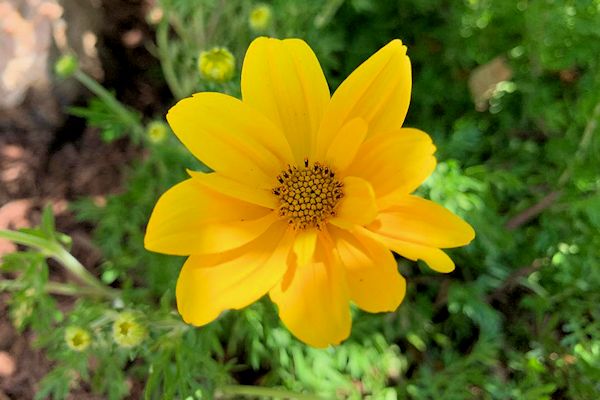
Goldilocks Rocks is a heat and drought tolerant plant that has been performing well in my southern exposure garden. Its vibrant golden-yellow blooms continue throughout spring, summer and into fall and are an attraction for pollinators. Its compact size makes this annual an excellent addition to the front of a sunny garden border.
Diamond Snow Euphorbia
Hardiness Zones: 10-11 (Annual)
Exposure: Full-Partial Sun
Bloom Season: Spring-Fall
Mature Size: 12-18 inches

Voted annual of the year for 2020, this variety replaces Diamond Delight with the vigor of Diamond Frost. This easy to grow plant resembles snowflakes with its bright white delicate blooms that last all summer and into fall. 'Diamond Snow' is heat and drought tolerant and also deer resistant and makes a lovely addition to the garden. Visitors to the garden have regularly admired this one!
Proven Winners Collection New Plants for 2020
I hope you enjoyed This Month in the Garden for September. Be sure to stop by on the 1st. of each month for This Month in the Garden, as I share gardening tips, information and horticultural adventures! Also be sure to check out these new introductions from the growers at Proven Winners! Linking with:  Floral FridaysMacro Monday 2Friday Photo JournalImage-in-ing Weekly Photo Link-Up and Dishing It & Digging It.

Author: Lee@A Guide to Northeastern Gardening,© Copyright 2010-2019. All rights reserved.

Sunday, October 1, 2017

This Month's Color in the Garden October 2017: Chrysanthemum for the Autumn Garden

This Month's Color in the Garden October 2017
Autumn is upon us in the northern hemisphere and it's time for another This Month's Color in the Garden. For the month of October the feature color is orange and Chrysanthemum comes to mind, as it is a favorite fall addition for many a gardener, supplying a burst of color for the landscape as the temperatures cool.
Chrysanthemum (Dendranthema grandiflora)

Chrysanthemum, commonly referred to as mums, are characterized as perennials in many areas, but are also treated as annuals by many gardeners. Their bright colors and variety of blooms are an attraction in the autumn garden. Depending on the specific variety, most mums are cold hardy in USDA zones 5 through 9, which means they can overwinter in the ground. In northern areas, it is preferable to plant Chrysanthemums in spring so they have the entire season to become established. In southern areas, they may be planted in either spring or autumn, but autumn is best to avoid excessive heat. Most Chrysanthemums do well in an organic well-drained soil in full sun. To care for your plants and keep them full, pinch back new growth when it reaches 4-6 inches and continue pinching through June. This will keep plants compact and prevent them from blooming too early.
Chrysanthemums
There is much history and folklore behind Chrysanthemums. Named from the Greek prefix "chrys-" meaning golden (the original color) and "-anthemion," meaning flower, years of hybridization have produced a full array of colors including shades of yellow to white, orange, purple, pink and red. Chrysanthemums are the November birth flower, the 13th wedding anniversary flower and in Japanese culture, the opening of a chrysanthemum's petals represents perfection. Confucius at one time considered these plants to be associated with mediation and since the 15th century, Chrysanthemums were grown as flowering herbs and considered an honored plant with exceptional powers. Folklore says that a single petal at the bottom of a wine glass will encourage a long and healthy life. Since this month's color is orange, orange is known to symbolize joy, warmth, optimism, happiness, freedom, expression, enjoyment and creativity. Throughout history, the American Indians have associated the color orange with kinship, and in China and Japan, the color orange symbolizes happiness and love.
Chrysanthemums come in a variety of colors.

Whether you are in the northern or southern hemisphere, Chrysanthemums can be an excellent addition to your garden. Other orange blooming flowers include Gaillardia (Blanket Flower), Lillium, Lantana, Marigold, Zinnia, Dahlia, Butterflyweed, Helenium, Red Hot Poker, California Poppy or perhaps Bird of Paradise or Aloe for those warmer climates.

I hope you enjoyed This Month's Color in the Garden for October. Please do share your experiences with the color orange in your garden, whether it be with plants, hardscape or garden decor. Next, join me for Garden Bloggers' Bloom Day and Foliage Follow-Up on the 15th! See you around the garden!

As Always...Happy Gardening!

Author: Lee@A Guide to Northeastern Gardening, © Copyright 2017. All rights reserved

Friday, June 30, 2017

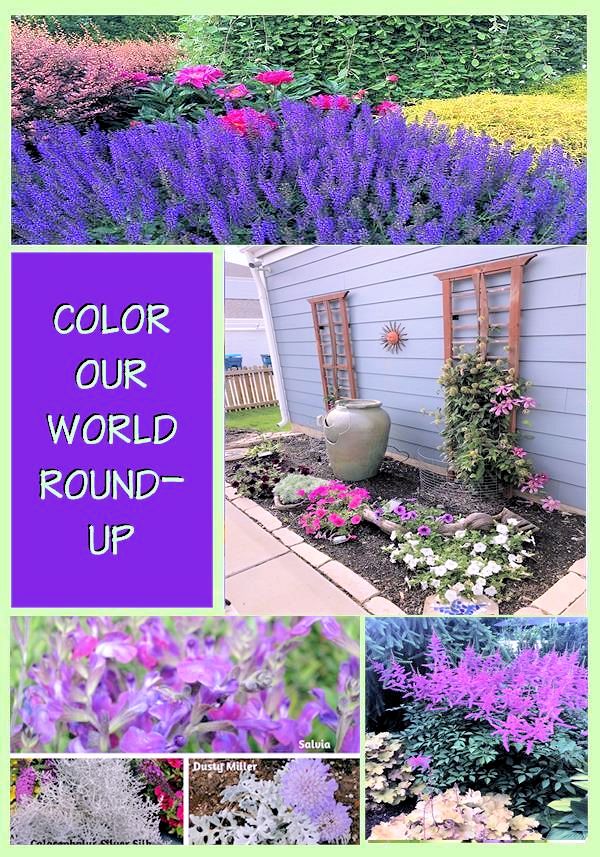
Color Our World Round Up June: Purple Blooms for Your Garden and the Folklore Behind Them

Color Our World Purple!
Welcome! It's time for another Color Our World Round-Up post. Each month the knowledgeable bloggers from Project Beautiful get creative by writing articles with focus on a particular color. The month of June is all about the color purple! Purple is considered a cool and calming color in the garden and has been viewed as  a symbol of royalty and heroism throughout cultural history. To enjoy reading all about the color purple, simply click on the links below to further view each article.

First up is Terri Steffes, from Our Good Life. Terri discusses how she uses the color purple in her garden as an accent, and includes some interesting folklore behind the use of purple throughout history. In her article Color My World Purple, she mentions that "Purple is such an interesting color, because it is rarely seen in nature. It's the most powerful wavelength in the rainbow, akin to x-rays and gamma rays.  It is very likely our prehistoric ancestors never even saw the color purple, because it is so rare in nature. 

In my garden, I like to use purple as an accent. The rich colors are perfect with the lighter yellows and pinks that I also like to use. I really enjoy the rich purples of the Wave petunia. The regular Wave comes in purple classic and misty lilac, both which I used in my garden.  We also love clematis, which usually bears a purple blossom, although they do come in other colors." Read more here.


Next,  Susan Brandt from Blooming Secrets shares her views on combining the colors purple and silver in the garden with her article Color Combos: Purple and Silver. "Throughout history, the color purple has been associated with royalty. During the time of ancient Rome it was the color of the robe worn by the Caesars and today it is still used by the British Royal Family as a ceremonial color on very special occasions. Silver is the color of prestige. As a precious metal, it symbolizes riches and wealth. Purple and Silver are distinctive colors and they are equally unique in the garden. In my opinion, when combined together in a container on a deck or in a hanging basket on a porch, Purple and Silver represent “garden elegance”! Read more here.

Lynne Cherot from Sensible Gardening delights us with her post Purple in the Garden. "When I am an old woman I shall wear purple” the famous first line of English poet Jenny Joseph’s poem “Warning”. The years tick by quickly and I’m not quite at that point in my life so I probably won’t be wearing purple any time too soon, however that doesn’t mean I can’t have it in my garden. The meaning of purple is good judgment. Purple is a combination of red and blue, the warmest and coolest colours, symbolizing magic, mystery, royalty, creativity and the spiritual. It’s been suggested that you should wear purple when you want to encourage fantasy and imagination. Purple flowers have an enchanted, elegance to them and some of the most beautiful and delicate flowers are purple." Read more here.

Finally, here is my post This Month's Color In the Garden: 12 Shades of Purple Blooms for your Garden! "Welcome to This Month's Color in the Garden! Throughout history, the color purple has been associated with royalty, dignity, grandeur, devotion, peace, pride, nobility, luxury, and power. Throughout history, purple robes have been worn by royalty, and many believe this came to be due to the rare occurrence of purple in nature, making the dye expensive to create. Purple represents nobility, as in the Purple Heart awarded by the The United States Military to soldiers wounded in battle and In Thailand, purple is the color of devotion and peace for mourning widows. The lighter shade of purple, or lavender, has long been associated with beauty and femininity. And finally, in landscape design, purple is considered a cool, peaceful and calming color, which is wonderfully complemented by the warmer and more fiery shades of yellow and orange. Here are 12 shades of purple blooms to carry you throughout the gardening season." Read more here.

Thank you for visiting and I hope you enjoyed #PB Color Our World Round-Up for the month of June. If you are enjoying these monthly Round-Ups, please leave a comment, and do share your thoughts about the color PURPLEAlso, be sure to visit these wonderful bloggers regularly for their inspiring articles on gardening, home remedies, DIY projects, decorating, culinary delights and more! I am also linking to Floral Friday Fotos. Check out their weekly meme! Lastly, be sure to check out my two books on Amazon, featuring landscape design principles, feature gardens, plant combinations and maintenance tips, along with a dash of inspiration! 

MY BOOKS ON AMAZON:


As Always...Happy Gardening!

Author: Lee@A Guide to Northeastern Gardening, © Copyright 2017. All rights reserved


Sunday, September 4, 2016

The History and Meaning of Sunflowers

Sunflower (Helianthus Annuus ) 
I have always had an admiration for sunflowers, as do many, so I decided to look into their history and meaning. Since the sunflower has a remarkable resemblance to our sun, early Indian settlers believed the flower to represent the "life-giving" force of the Great Spirit.  A sunflower follows the rays of the sun, so it was looked upon as a symbol of spiritual faith, worship and fertility. Today, the sunflower is still looked upon as a symbol of adoration, loyalty and longevity. Much of the meaning of sunflower stems from its namesake, the sun itself.
Sunflower (Helianthus Annuus ) Taken in Newport, Rhode Island
The first wild sunflower is known to be native to North America. Evidence shows that the first sunflower crops were cultivated by the American Indian around 3000 BC, but its first commercialization didn't take place until it reached Russia. Indian tribes crushed the seeds into flour for bread and cakes or combined with vegetables, and the oil from the seed was used for cooking. Parts of the plant were used medicinally for snakebites, oils for the skin and hair and also for dyes to be used in body painting and decoration. Around the year 1500, the plant was taken to Europe by Spanish explorers and sunflowers became widespread as an ornamental. By the 18th century, the sunflower became more popular as a cultivated plant, and by 1830 the production of sunflower oil was performed widely on a commercial scale.
Sunflower (Helianthus Annuus ) 
By the early 19th century, Russian farmers were growing over 2 million acres of sunflower, and by the late 19th century, the sunflower as we know it found its way to the United States. Canada started the first sunflower breeding program, which led to the construction of a crushing plant, and future production of sunflower oil. Today,Western Europe continues to be a large consumer of sunflower oil, but depends on its own production since the U.S. exports to Europe are limited. The sunflower itself is grown worldwide for ornamental uses and is known for its radiance and beauty.

(Photos by Lee Miller and Property of a Guide to Northeastern Gardening) 

Sunflowers are seen as symbols of good luck. Planting them around your home will bring good fortune and it is said that if you pick a sunflower at sunset, and wear it on your person, it will bring you good luck the following day. According to folklore, it is bad luck to cut down a sunflower, and if you sleep with a sunflower under your pillow, you will become wise. 

Links to More Gardening Information:
https://www.facebook.com/landscapedesignbylee 


Author: Lee@A Guide to Northeastern Gardening, © Copyright 2016. All rights reserved