Showing posts with label container gardening. Show all posts

Sunday, June 1, 2025

Feature Plant Nepeta (Catmint): A Fragrant Herb with Medicinal Value and Garden Charm

Nepeta x faassenii 'Cat's Pajamas' (Dwarf Variety)
Welcome to This Month in the Garden! Today's feature perennial is Nepeta, commonly known as catmint. Nepeta is a beloved herbaceous perennial in gardens around the world, admired for its soft, aromatic foliage and spikes of violet-blue flowers. Its name often confuses it with catnip (Nepeta cataria), which belongs to the same genus and shares some characteristics, especially its appeal to felines. Nepeta leaves are typically gray-green and emit a pleasant, minty fragrance when crushed. Blooming from late spring into fall, catmint produces spikes of small, tubular flowers in shades of blue, lavender, or purple depending on the variety, and grows between 12 inches to 3 feet in height, making it ideal for borders and edging. Another attribute is that Nepeta attracts pollinators such as bees, butterflies, and other beneficial insects. Due to its strong scent, it’s often left untouched by deer and rabbits.

Nepeta (Catmint)
Hardy in USDA zones 3-9, Nepeta tolerates poor or sandy soils but dislikes heavy, soggy ground and thrives in full sun, though it can tolerate partial shade. More sun typically leads to stronger flowering and a more compact form. Once established, catmint is drought-tolerant. Avoid overwatering, as soggy soil can lead to root rot. While little to no maintenance is required for this plant, regular deadheading will encourage reblooming. Cut back after the first flush of flowers to keep a more compact plant, promote new growth and extend bloom time. 
Nepeta (Catmint)
Historically, various species of Nepeta, particularly N. cataria (catnip), have been used in traditional herbal medicine. Though less well-known, catmint contains compounds that provide mild therapeutic effects. Nepetalactone, which is responsible for the intoxicating effect on cats has also been used as a mild sedative on humans. Tannins and flavonoids, known for their antioxidant properties can calm anxiety and promote restful sleep. Nepeta is often taken as a tea made from dried leaves and flowers to ease stomach cramps and nausea. It has also be used as a digestive aid to relieve gas, bloating, and indigestion. Its antispasmodic and soothing properties also make it helpful for easing symptoms of colds, coughs, and fevers and its infused oils can be used topically to treat minor skin irritations and insect bites.  Nepeta has also been used as a natural repellant to deter garden insects such as aphids and squash bugs.

Nepeta x psfike 'Little Trudy' (Dwarf Variety)
Overall, Nepeta or catmint is far more than just a pretty face in the landscape or a treat for cats. Its adaptability, easy-care, long-lasting blooms, and subtle healing properties make it a standout plant for both ornamental and herbal uses. Whether you’re lining a walkway, attracting pollinators, or brewing a calming evening tea, catmint is a quiet powerhouse that deserves a place in your garden! 

Looking for some Inspiration? Purchase My Books:


As Always...Happy Gardening!

Author: Lee @A Guide to Northeastern Gardening, © Copyright 2010-2025. All rights reserved. 

Saturday, February 1, 2025

Landscape Plant Care in Freezing Temperatures

This Month in the Garden
Winter can be a challenging season for outdoor plants. Freezing temperatures, frost, and harsh winds can harm or even kill your garden’s greenery if not properly protected. However, with some planning and care, you can ensure your plants survive through the cold months. Here’s how to give your outdoor plants the preventive care they need during freezing weather.

1. Plant Hardiness: Understanding the hardiness of your plants is the first step. Some plants, like pansies and evergreens, are naturally cold-tolerant, while others are more vulnerable. Use the USDA Plant Hardiness Zone Map to determine which plants are best suited for your region and which need extra protection during winter. By the way, here on Long Island we are in hardiness zone 7b. Also, when choosing plants, try to choose those that are cold hardy one to two zones colder than where you live.

2. Monitor Weather Forecasts: Stay informed about upcoming freezes, frost warnings, and temperature drops. Quick action such as covering plants or moving containers can make all the difference in preventing damage. It is the extreme temperature fluctuations that are most detrimental to your outdoor plants.

3. Mulch for Insulation: Adding a layer of organic mulch such as wood chips, straw, or shredded leaves can help insulate the soil and roots from extreme temperature fluctuations. Mulch acts like a blanket, retaining warmth in the ground and preventing frost heaving, where repeated freezing and thawing push roots out of the soil. Apply a 2–4 inch layer around the base of your plants but keep it away from the stem to avoid rot.

4. Anti-Desiccants: Some broadleaved evergreens such as Rhododendron, Azalea, Aucuba, Skip and Cherry Laurel, Holly and Leucothoe (to name a few) lose excessive moisture through their leaves in winter. Applying an anti-desiccant spray can help prevent water loss and protect foliage from drying winds. Anti-desiccant should be sprayed in the late fall/early winter as a preventive before freezing temperatures occur. Follow the instructions on the product label and do not apply when temperatures are going below freezing, as this can do more harm than good and put the plant at risk. With the temperature extremes we have been having, and popularity of certain tropical-like plants such as palms and banana trees increasing in outdoor spaces, anti-desiccant can be a helpful preventive.


Thermonasty: During frigid days when temperatures reach below 20 degrees, certain broad-leaved evergreens such as Rhododendron, display a unique trait known as thermonasty. This adaptation causes the leaves of the plant to act as a natural thermometer. When temperatures dip below freezing, leaf margins curl inward causing the leaf to roll up and droop. This process reduces the surface area of the leaves, thereby reducing water loss. Also, the narrow, drooping, needle-like leaves help to shed snow, which would otherwise accumulate and break branches.

5. Keep your Plants Hydrated: Hydration is crucial for plants in winter, but overwatering can be just as harmful as dehydration. Before a freeze, give your sensitive plants a deep watering to ensure the roots are well-hydrated. This helps the soil retain warmth and protects the roots from freezing. Avoid watering during freezing temperatures, as it can lead to ice damage. Watering before a deep freeze works well with outdoor container gardens and should be done before covering the plant.

6. Frost Heaving: Certain perennials such as Heuchera (Coral Bells) are subject to frost heaving during extreme temperatures. This occurs as the ground freezes, then thaws, then freezes again, causing the roots of the plant to uplift. When this occurs, gently push the crown of the root back into the soil with your foot. If possible, push some extra mulching around the plant for further protection. The mulch will help keep the plants roots and crown in contact with the insulating soil.

7. Relocate/Cover and Protect Plants: Plants in containers are more susceptible to cold weather because their roots are less insulated. Move pots to a sheltered location, such as a garage, porch, or greenhouse. If relocating isn’t an option, frost cloths, burlap, or even old bed sheets can shield your plants from freezing temperatures. Cover delicate plants, such as citrus trees or young or tender shrubs, when frost is predicted. Make sure the cover extends to the ground to trap heat from the soil, and secure it with stakes or rocks to prevent it from blowing away. Avoid using plastic directly on plants, as it can trap moisture and cause more harm.

8. Avoid Pruning in Winter: While it’s tempting to prune during winter, avoid heavy cutting as it can stimulate new growth that’s vulnerable to frost. Instead, wait until late winter or early spring when the risk of freezing has passed. For now, remove only dead or damaged limbs to prevent disease. An additional note is to not try to remove frozen ice from the plant. It is best to allow the plant to thaw naturally, as not to damage/break any branches.

9. Build Wind Barriers: Strong winter winds can dry out plants and cause damage, especially in areas located near water. Create windbreaks using fences, screens, or even stacks of straw bales to shield your garden. Place these barriers on the side of your plants that faces the prevailing wind to minimize exposure. 

10. Build Cold Frames & Cloches: Cold frames and cloches are great for protecting tender plants or seedlings from frost. A cold frame is essentially a mini greenhouse, while cloches are dome-shaped covers placed over individual plants. These structures help to extend the gardening season by  trapping heat and creating a microclimate that helps plants survive harsh conditions. Each method captures the daytime solar energy; thus, heating the surrounding air and the soil floor, while helping to insulate plants. Try to place your cold frame in a sheltered location (as near a structure) and away from strong winds.


Winter doesn’t have to mean the end of your garden’s beauty. By preparing your outdoor plants for freezing weather, you can protect their health and enjoy a thriving landscape come spring. With proper insulation, hydration, and care, your plants will emerge stronger and ready for the growing season.

I hope you enjoyed This Month in the Garden. Be sure to stop by on the 1st. and 15th. of each month as I continue to share gardening tips, information and horticultural adventures! Catch up on posts and other news with my newsletter, Northeastern Gardening News. Subscribe for free to receive monthly updates. 

Thursday, August 1, 2024

This Month in the Garden: Lavender by the Bay: A Blooming Legacy in East Marion, Long Island

Lavender by the Bay, Long Island

Welcome to This Month in the Garden! Nestled in the scenic landscapes of East Marion, Long Island, Lavender on the Bay has become a cherished landmark, drawing visitors from near and far to experience the tranquility and beauty of its purple fields. The history of Lavender on the Bay is a story of vision, passion, and a commitment to sustainable farming practices.
Entrance to the Lavender Farm

Lavender by the Bay, established in 2002, is now the home of over 800,000 lavender plants on the original 17 acre property in East Marion, with an additional 30 acres purchased in Calverton in 2018. Serge Rozenbaum, who was born in France spent his childhood on a farm, then moved to Israel as a young adult where he met his wife Susan. In 1979, Serge, Susan and their two sons moved to Susan's hometown of New York City, and purchased land for a summer getaway in Southhold, New York. It was where Serge designed a lavender dominant landscape to remind him of his childhood days in France, while bringing the charm of  French lavender farms to the shores of Long Island.
A welcoming place for a Photo Shoot!
Over the years the lavender grew profusely with just the perfect conditions of the North Fork's salty air and the lavender fields continue to grow with several hardy species, including Lavandula angustifolia and Lavandula x intermedia, known for their resilience and aromatic qualities. As an elementary school art teacher, Susan started crafting sachets and bouquets from leftover flowers, while Serge took on bee keeping as a side hobby. The demand for lavender and eventually lavender honey grew to the point that the couple needed more land. They found the perfect location in East Marion, Long Island and established Lavender by the Bay.
Sit and Enjoy the View
Word of the farm’s enchanting fields quickly spread, and Lavender on the Bay became a popular destination for locals and tourists alike. The Rozenbaum's expanded their operations, planting additional acres of lavender and incorporating other complementary plants such as rosemary and sage. The farm also began producing a variety of lavender-based products, from essential oils and soaps to culinary delights and decorative items.
Live Life in Full Bloom!

Beyond its commercial success, Lavender on the Bay has played a significant role in the community. The Rozenbaum family has been dedicated to educating the public about the benefits and uses of lavender. They host workshops and tours, teaching visitors about lavender cultivation, harvesting techniques, and the plant’s many uses. The farm also collaborates with local schools and organizations, providing hands-on learning experiences for students and promoting environmental stewardship.

Lavender Fields Forever
Sustainability has been a cornerstone of Lavender on the Bay’s operations. The Rozenbaums have implemented eco-friendly practices, including organic farming methods and water conservation techniques. They have also explored innovative uses of lavender, such as natural pest control solutions and soil enhancement methods. These efforts have earned the farm recognition for its commitment to preserving the local ecosystem while maintaining high-quality production standards.

Welcome to the Store!

Lavender on the Bay has had a profound impact on the cultural and economic landscape of East Marion and the greater Long Island area. The farm has become a symbol of local pride, attracting visitors and boosting tourism. It has also created job opportunities and supported local businesses through partnerships and collaborations. Each year a portion of the field entry fee is donated to various groups, spreading the love of lavender throughout the community.
For a Love of Lavender

As Lavender on the Bay continues to flourish, the Rozenbaum family remains dedicated to their original vision of creating a serene, beautiful space for people to connect with nature. They are exploring new varieties of lavender and expanding their product line, always with an eye toward sustainability and quality. With each passing year, the farm’s legacy grows, rooted in a deep love for lavender and a commitment to enriching the lives of all who visit.
More Lavender! 

While exploring the farm, you will experience two types of lavender, English with a sweeter fragrance and vibrant purple flower and French with a stronger fragrance, slightly duller coloration, and taller bloom. Typically, English Lavender will bloom from mid-late June, while some varieties of English Lavender will bloom at the end of the summer into early fall. French lavender blooms in the beginning of July, peaks for about two weeks then extends into the end of July. Both types have their fragrance and attributes.
Lavender and Yarrow Dried Flowers 
Lavender on the Bay is more than just a farm; it is a living testament to the power of passion and vision. From its humble beginnings to its status as a beloved local landmark, the farm embodies the spirit of Long Island—resilient, innovative, and deeply connected to the land. As it continues to bloom, Lavender on the Bay will undoubtedly remain a cherished part of East Marion’s history and a beacon of natural beauty for generations to come.
You are where you need to be...Just Breathe!
I hope you enjoyed This Month in the Garden. Be sure to stop by on the 1st. and 15th. of each month as I continue to share gardening tips, information and horticultural adventures! 


"As Always...Happy Gardening!" 

Author: Lee @A Guide to Northeastern Gardening, © Copyright 2010-2024. All rights reserved. 

Monday, April 1, 2024

Feature Shrub Spirea Big Bang 'Candy Corn'

Feature Shrub Spirea Big Bang 'Candy Corn'

Welcome to This Month in the Garden! There is a new flowering shrub in town, and it is called Spirea Big Bang 'Candy Corn', scientific name Spirea japonica. While this shrub produces wonderful deep pinkish-lavender blooms in summer, in this designer's opinion it's all about the ever-changing medley of foliage! This new cultivar was developed by Dr. Tom Ranney of North Carolina State University and has become popular for several reasons, one of them being that it is considered sterile and non-invasive.

 Spirea Big Bang 'Candy Corn' Summer Foliage

Cold hardy to USDA zones 4-8, Double Play 'Candy Corn' thrives best in full sun and a well-drained soil and offers an ever-changing array of foliage color, from bright red to candy corn orange to yellow-green. Summer foliage color is determined by exposure. Leaves are darker in part shade, and a brighter yellow in sunny exposures. Pollinator friendly blooms offer another round of color in late spring and early summer. This dwarf form of Spirea stays compact and rounded at a height of 18-24 inches high by wide at maturity and is compact enough to grow in a container. I was also surprised to see this variety getting spring buds before any of the other Spirea.

Spirea Big Bang 'Candy Corn' Late Winter/Early Spring

This cultivar is adaptable to a wide range of soil conditions, including clay and is drought tolerant once established. With its small size, little to no pruning is required, making it perfect for low-maintenance gardens. This flowering shrub is also deer and  rabbit resistant.

Spirea Big Bang 'Candy Corn' Spring Foliage
I hope you enjoyed This Month in the Garden. Be sure to stop by on the 1st. and 15th. of each month as I continue to share gardening tips, information and horticultural adventures! Perhaps Spirea Big Bang 'Candy Corn' will go onto your wish list as a new garden addition!


"As Always...Happy Gardening!" 

Author: Lee @A Guide to Northeastern Gardening, © Copyright 2010-2024. All rights reserved. 

Saturday, July 1, 2023

This Month in the Garden: Seasonal Planters

Seasonal Planters

Welcome to This Month in the Garden! While traditional garden beds offer a more permanent option, seasonal garden planters have become increasingly popular due to their versatility, mobility, and ability to be altered with different displays throughout the growing season. Based on the time of year, plant choices can be combined for an ever evolving display of color and foliage, from robust blooms in springtime, to colorful foliage and autumn-like colors to bring in fall, and perhaps evergreens to carry on through wintertime. Seasonal planters play an important role in the garden and provide additional interest even beyond landscaping. 
Spring/Summer Planter Combination
We often hear the terms, "thriller", "filler" and "spiller" used in container gardening. A "thriller" is defined as the main central focal point in your planter (usually taller), surrounded by the medium-sized "fillers", which take up the majority of space in the planter, to the "spillers', which can create a dramatic effect by trailing over the sides of the container for added interest. For starters, this spring/summer arrangement consists of the variegated foliage of Canna Lily Indica Tropicana 'Mactro Gold' as the center "thriller", or focal point, four assorted Coleus and four New Wave Petunia as a second layer, or "fillers" and four Sweet Potato Vine (Purple and Gold) with four Tradescanthia Pistachio White, as "spillers", which will cascade over the rim of the planter as the season progresses.
Summer Planter Combination
Container options come in a variety of sizes, shapes and materials and can be aesthetically pleasing, adding interest to your arrangement. Several options are available, including cement, resin, ceramic, terracotta, or perhaps boxes or barrels constructed of wood. For areas of limited space and changing sunlight, portable planters give you the flexibility to rearrange your garden and create interest. When planning your arrangement, be sure to use a good lightweight all purpose potting soil mix containing a balanced blend of organic matter, such as compost, peat moss or coconut coir, drainage and aeration materials such as perlite or pumice, pH adjusters and a source of nutrients for healthy growth. A container with drainage holes is best, but if not possible, be sure to use a layer of  a course material, such as gravel or pebbles in the bottom of the planter to allow excess water to drain away from the plant's roots. This cement urn is the ideal candidate for a combination of two varieties of flowering New Wave Petunia and Sweet Potato Vine for all-summer interest. River rocks were placed in the bottom (more narrow) section of the urn for drainage purposes. 
Shade Foliage Planter Combination
For a shady location, try a combination of miniature Hosta, variegated liriope and Black Mondo Grass for a striking display of foliage. This birdbath, turned planter, is tucked away in the garden as a hidden surprise. Helpful Tip: Be sure to choose plantings which share similar lighting and water requirements to ensure success!
Shade Patio Planter Combination

Another shade combination for under a covered patio is a combination of Coleus and Sweet Potato Vine. Try combining Coleus varieties of different heights and colors to create a layered look and add the Sweet Potato Vine as a "spiller" to cascade over the edges of the planter. This is just one example and the possibilities are numerous. Maintenance Tip: Once the Coleus starts to flower, I keep the plant deadheaded to prevent it from going to seed, thus extending its season into fall.
Full Sun Succulent Planter
For an area with full sun, you can get adventurous and choose a selection of succulents which appeal to the senses. I enjoy using the terracotta strawberry planters for aesthetics and use combinations of groundcover such as Sedum 'Blue Spruce' (blue-green), 'Angelina' (yellow), Sedum 'Tricolor' (green and pink), and 'Dragon's Blood' (deep purple). There is an endless supply of interesting succulents, so just have fun!
Full Sun Succulent Planter
So what are you waiting for? Add some planters to your garden this season and enjoy exploring new selections, including annuals, tropical species, evergreens and succulents and create the perfect combination to suit your taste and style. Seasonal planters are the ideal addition to your space and bring charm, versatility, and adaptability to your garden throughout the seasons!

I hope you enjoyed This Month in the Garden for the month of July. Be sure to stop by on the 1st. and 15th. of each month as I continue to share gardening tips, information and horticultural adventures! Also, be sure to check out my author page and books for gardening information and helpful advice, all based on my 27 years of experience as a landscape designer and ongoing involvement in the horticultural field. Until we meet again...Happy Gardening!


Author: Lee @A Guide to Northeastern Gardening, © Copyright 2010-2023. All rights reserved. 

Thursday, December 15, 2022

Garden Bloggers' Bloom Day & Foliage Follow-Up December: The Changing Northeastern Garden

Welcome!
Welcome to my December Long Island garden! As the seasons transition from autumn into winter, the garden continues to change, with the current focus on evergreens, berries, changing bark and hidden signs of spring to come. As the daytime temperatures settle into the 40's, with some frosty mornings, and the first dusting of snow on the morning of the 12th, the garden enters its winter sleep, but there is still much to see. Come along with me for a tour and you better bundle up...it is a bit chilly out here!
The First Dusting of Snow!
Front Entry Garden-Evergreen Way!
The focus as winter approaches is on evergreens, as they supply the needed structure and color to keep the garden going as the temperatures plummet. Here along the entry walkway are evergreens Weeping White Pine, Weeping Blue Atlas Cedar, Japanese Garden Juniper, Dwarf Mugo Pine and Blue Star Juniper along with Japanese Golden Sedge and Variegated Liriope. The Coral Bark Maple in the backdrop (left) will become more vibrant as the winter months progress, as its younger stems will turn a vibrant coral-red.
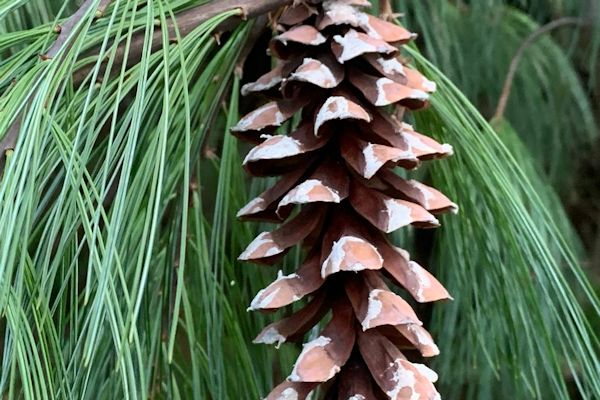
Weeping White Pine Seed Cone
One of my favorite things about the Weeping White Pine are its seed cones, which can be seen all year, but I tend to pay closer attention to them as the temperatures cool.
Dwarf Mugo Pine 'Slowmound' and Lilyturf (Liriope Variegata)
Another favorite in the garden is this dwarf, slow-growing Mugo Pine along with Lilyturf. Here is is all about combining foliage and texture. The foliage of the Variegated Liriope (lilyturf) will stay all winter long to protect the plant and provide interest, and will get cut back in springtime to allow for new growth.
Crape Myrtle and Gold Lace Juniper
In the backyard garden is Crape Myrtle 'Sioux', which is defoliated now, but the bark is amazing! I enjoy getting a close up view to see the various colors. It usually peels away late summer to expose the colors underneath.
Crape Myrtle Bark!
Let us take a closer look!
Japanese Golden Sedge and Ajuga Black Scallop
Here is a combination of 'Black Scallop' Ajuga with Japanese Golden Sedge. These two do very well underneath the shade of the Weeping Pussy Willow along the back patio.
'Yaku Jima' Dwarf Maiden Grass Winter Mode
Along the pool garden is Dwarf Maiden Grass 'Yaku Jima' in autumn/winter mode. It will also stay until springtime when it gets cut back. This practice offers protection to the roots. If desired, the plumes can be removed if they start to get too messy, but I always leave a good couple of feet to protect the center crown from cold.
Weeping Norway Spruce, Nandina 'Obsession' and Dwarf Cryptomeria
Along the patio garden is Weeping Norway Spruce and Nandina 'Obsession'. In the foreground is Dwarf Cryptomeria with its yellow-lime foliage and Ajuga 'Black Scallop' in the backdrop. 
Nandina 'Obsession' Fall/Winter Foliage
The Nandina foliage is so colorful this time of year, which was what attracted me to this plant. This variety is dwarf, evergreen, and cultivated so it does not produce the toxic berries known to some other varieties of Nandina. It is a win-win!
Nellie Stevens Holly Berries
Here are the berries of Nellie Stevens Holly this time of year. They add a nice touch to the landscape.
Dwarf Red Pine and Golden Juniper 'Gold Strike'
This dwarf form of Red Pine and low growing Juniper 'Gold Strike' add some color along the patio...
Stachys (Lamb's Ear) Fall/Winter
while trustworthy Lamb's Ear always adds a touch of white to the perennial border.
St. John's Wort Fall/Winter
While this St. John's Wort produces pretty yellow flowers in summer, it's berries are even more attractive in fall and winter! Here is a view up close!
A Little Bit of Whimsy!
For a little bit of whimsy, this is the newest statue addition to the garden. It reminds me of days gone by!
Weeping Pussy Willow Catkins Forming!
While much of the garden goes into dormant mode, there are already catkins forming on the Weeping Pussy Willow tree, which are a sign of spring to come...
Evergreen Planter
and along the back entry are container planters that can be enjoyed all year long and even in winter. Here are (left to right) Variegated Boxwood, Dwarf Alberta Spruce and Golden Hinoki Cypress 'Nana Lutea'. 
Mondo Grass Planter
Another planter has Ophiopogon planiscapus (Black Mondo Grass), which stays evergreen all year long.
Seasonal Decor
As we come to the end of the tour, winter bear shows off his seasonal foliage... 
Indoor Garden-Thanksgiving Cactus
and indoors, the Thanksgiving Cactus are blooming! Helpful Tip: To tell the difference between Thanksgiving and  Christmas Cactus, Thanksgiving Cactus has more jagged edges to their leaves while Christmas Cactus leaves are more scalloped. There is also an Easter Cactus with much more rounded leaves!
Thanksgiving Cactus
One cannot have too many Thanksgiving Cacti!
Thanks for Visiting!
I hope you enjoyed your visit to my December garden and as always, I look forward to your comments and visiting your garden too! Special thanks go out to our hostess Carol at May Dreams Gardens, who makes it possible to see blooms on the 15th of every month with her meme Garden Bloggers' Bloom Day. Also, special thanks to Pam Penick at Digging who had hosted Foliage Follow-Up, a meme I will continue to honor. I am also linking with some other wonderful hosts and hostesses at Floral Friday Fotos, Friday Bliss at Floral Passions, Macro Monday 2, Mosaic Monday at Letting Go of the Bay Leaf, Nature Notes at Rambling Woods, Image-in-ing weekly photo share every Tuesday with NC Sue and Gardens Galore Link Up Party every other Monday with Everyday Living. I am also happy to join the Weekly Photo Link-Up at My Corner of the World on Wednesdays and Garden Affair at Jaipur Garden.