Showing posts with label mulching your garden. Show all posts

Thursday, February 1, 2024

This Month in the Garden: Winter Gardening: Protecting Your Outdoor Plants from the Cold


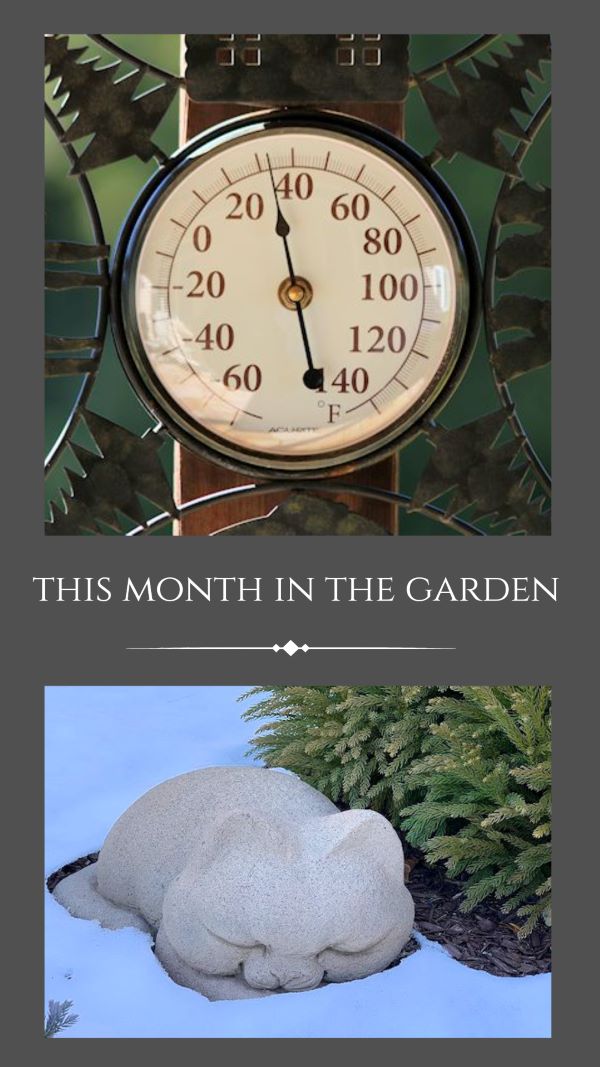
Over the last couple of years, temperature extremes during the winter months have taken a toll on our outdoor gardens. From weeks of mild temperatures in the 40's and 50's to cold blasts plummeting temperatures into the teens and even single digits, these extremes pose a risk to plants, and safeguarding them from the harsh cold becomes crucial for maintaining their health. Some broad-leaved evergreens such as Rhododendron will even tell you when temperatures are below 20 degrees. Their leaves will curl in severe cold, a process known as thermonasty, which helps to reduce surface area and conserve moisture. There is a way you can be proactive. Here are some effective strategies to help you protect your green companions during the chilly months.

Choose Cold-Resistant Plants: When purchasing plants, be sure to choose those which can withstand temperatures which are one to two zones colder than your location. Research and select species that thrive in your specific region, as they are more likely to withstand winter conditions. For sensitive plants or those in containers, consider bringing them indoors during extreme cold spells. A garage or enclosed porch can provide a temporary shelter until milder weather returns. For certain landscape plants which are broad-leaved, such as Rhododendron, Azalea, Osmanthus (False Holly), Euonymus, Aucuba, Cherry, Skip and Mountain Laurel, Leucothoe, Boxwood and Holly, the use of an anti-desiccant before winter sets in is recommended. 


Apply Mulching: A layer of organic mulch around the base of your plants will insulate the soil and regulate temperature. This acts as a protective barrier, preventing extreme temperature fluctuations that can be harmful to plant roots. Ideally, the best time to mulch is during late spring to early summer, or early fall. Be sure to mulch way before any sign of frost, as applying at the incorrect time can have the opposite effect and cause harm.


Proper Watering: Adjust your watering routine as winter approaches. Ensure that the soil is adequately hydrated before the first frost, as moist soil retains heat better than dry soil. However, be cautious not to overwater, as waterlogged soil can lead to root rot. With your outdoor containers, give them a good watering before you know there is going to be a severe temperature drop. This will help them to hydrate before the deep freeze.


Watch for Frost Heaving:
 
In freezing temperatures soil around your plants may be subject to frost heaving. This is when ice forms underneath the soil and expands upwards from the ground causing plants such as perennials to push upwards exposing the crown. Heuchera (Coral Bells) and Liriope are especially prone to this type of damage. As a preventive measure apply mulch finishing to your garden beds. To remedy, once the ground thaws, slightly tap the soil back down, and brush the mulch back around the exposed crown of the plant. During the time of frost heaving, avoid stepping into garden beds, as this can cause the soil to become too compact. Compacting the soil too much can have a negative effect on future soil drainage. 


Cover Plants: Stay informed about upcoming weather conditions. Cover plants when extreme temperature drops are predicted. Use protective covers, such as burlap or frost cloth, to shield your plants from frost and freezing winds. Make sure the covers are secured tightly to prevent heat loss, especially during the coldest nights. If you have potted plants, consider moving them closer to the house or clustering them together. This provides additional warmth and protection against the cold. Elevate containers to prevent them from sitting directly on cold surfaces and use frost covering until the freezing temperatures subside. Once the threat of plummeting temperatures has passed, you can uncover the plant and keep the cover nearby. For larger plantings, the use of temporary windbreaks such as wooden or fabric barriers can be used to shield plants from strong offshore winter winds.


Tips on Pruning & Fertilization: As a preventive measure, any dead or damaged branches should be pruned off trees and shrubs before winter sets in. Pruning encourages healthy growth and minimizes the risk of disease. However, avoid heavy pruning in late fall, as it may stimulate new growth that is vulnerable to frost. Adjust your fertilization routine in late fall to promote plant hardiness. Avoid nitrogen-rich fertilizers, as they can encourage tender growth susceptible to frost damage.


The winter months can be quite unpredictable and tend to be more drastic during the months of January, February, and even through March when the seasons are changing. By taking these proactive measures, you can ensure the health and vitality of your outdoor plants. Remember that each plant is unique, so tailor your approach based on their specific needs and the climate of your region.

I hope you enjoyed This Month in the Garden. Be sure to stop by on the 1st. and 15th. of each month as I continue to share gardening tips, information and horticultural adventures! 


"As Always...Happy Gardening!" 

Author: Lee @A Guide to Northeastern Gardening, © Copyright 2010-2024. All rights reserved. 

Tuesday, February 21, 2017

Spring is Approaching! - Garden Planning Guide: Maintenance Tips and Questions Answered

Spring Garden Planning Guide
Have the temperatures been rising and are you yearning to go out into the garden? Spring is approaching and it is a time to start planning and prepping the garden for a successful start to the planting season. There are some recommended maintenance tips for getting your garden underway. Here is a list of common gardening tasks to be performed in late winter/early spring. 

Cleaning Out Garden Beds

True or False? Any dead material remaining from last year should be removed from your garden now. True. It is best practice to remove dead material from the garden in fall to prevent possible pests and disease in your garden. If you have left annuals or perhaps perennials for winter interest, now is the time to tend to them, along with any weeds that might have survived the winter. Pull out any dead remaining annuals and prune perennials back to the ground to encourage new growth. If cold temperatures are still to be expected, push mulch up around the crown of the plants to protect them from temperature fluctuations.

Mulching Garden Beds
True or False? New mulching should be applied now before the ground thaws.  False. Mulch acts as an insulator and applying mulch before thawing would actually inhibit warming as temperatures rise. Allow the soil to warm, then apply two to four inches of natural pine mulch. When applying, keep mulch several inches away from tree and shrub trunks to prevent oxygen loss and rotting. Mulch benefits plants by reducing water evaporation, preventing weeds, adding organic matter to the soil and also acts as a buffer, preventing drastic changes in soil temperatures. 


Lawn Care

True or False? Nitrogen based lawn fertilizer can only be applied after April 1st.  True. According to the EPA, the prohibition on application of fertilizer between December 1st and April 1st applies to products that contain nitrogen (N), phosphorus (P), or potassium (K). If a product does not contain any of these nutrients, it could be applied during the winter months without violating this law. Explanation: If the ground is frozen, there is a greater danger of runoff and possible contamination of groundwater. Fertilizers applied when the ground is thawed and porous are absorbed and utilized by plant material and go through a natural filtration process before reaching the aquifer system. Please note that there are a variety of organic, natural fertilizers on the market that are more environmentally friendly. Success rate depends on brand and application.

Pruning Flowering Trees and Shrubs (Photo: Magnolia Royal Star)

True or False? Spring flowering trees and shrubs should be pruned in late winter/early spring. False. General rule of thumb is to prune flowering plants AFTER they flower. Early spring flowering trees and shrubs including rhododendron, azalea, forthysia, magnolia, plum, Eastern Redbud and cherry form their buds from the season before and should be not be pruned until after flowering. Pruning them now will remove flower buds that have already formed, resulting in a loss of blooms.

Pruning Summer Blooming Shrubs  (Photo: Buddleia Dwarf Butterfly Bush Lo & Behold)

True or False? Summer blooming shrubs such as Spirea and Buddleia should be pruned in spring. True. Mid and late summer flowering shrubs such as Spirea and Buddleia (butterfly bush) prefer a spring pruning to promote fullness and blooms. Prune Spirea slightly for shaping. If the plant is overgrown to the point it is unsightly, it can be pruned more drastically to rejuvenate it now in spring. Buddleia benefits from an early spring pruning and should be pruned all the way back in late winter/early spring to promote fuller plants and better blooms in late summer. This practice is best performed once you see signs of life on your plants.

Pruning Evergreens (Photo: Weeping White Pine)
True or False? The best time to prune evergreens is in early spring. True. Evergreens can be pruned anytime when there is no threat of extreme temperature changes that would cause undue stress; however, the best time is either in early spring before they push out new growth, or afterwards once new candles form. When pruning evergreens that form candles, such as white pine, it is best to cut candles in half to keep the plant more compact.

Pruning Liriope and Ornamental Grasses (Photo: Dwarf Maiden Grass on Left and Variegated Liriope on Right)
True or False?  Liriope and grasses should be cut back and divided now in spring. True. Liriope and ornamental grasses can be cold sensitive. Exposing the crown of the plant could be the reason for snow and cold damage. It is best to leave liriope and grasses alone in fall and to prune them back in early spring to allow for new growth. Spring is also the time to divide and move other perennials that have become overgrown. It is recommended that most perennials be divided every four years for best bloom. Dig up and divide with a sharp clean spade just as new growth appears, replant and add a sprinkle of slow release plant food in with the soil to help root promotion. Water in thoroughly.

Pruning Knock Out Roses (Photo: Double Pink Knock Out Rose)
True or False? Knock Out Roses should be pruned back in early spring. True. Wait until your roses are sprouting new shoots and showing some signs of life. Then, prune off dead wood or overgrown branches back about one third the size of the plant to promote strong growth and blooms. Be careful to watch while pruning so that you achieve a nice rounded shape for your plant. Early spring is also a good time to apply an organic slow release rose fertilizer mixed in with the soil at the base of the plant to ensure a successful start to the growing season. I would also recommend a regular watering schedule from the base of the plant, since roses do not fare well with constant water on their foliage.


Planting Summer Blooming Bulbs (Photo: Snowball Dahlia)
True or False? Summer blooming bulbs should be planted in late spring. True. While spring blooming bulbs such as crocus, hyacinths, tulips  and daffodils are planted in fall, late summer blooming bulbs such as  Dahlia, Canna and Gladiolus are planted in spring. Amend the soil with compost or manure to insure them a good start and plant in a well-drained area to prevent rotting. Generally, bulbs are planted at a depth of three times their diameter, and specific instructions are usually supplied on the packaging. Once planted, water your bulbs thoroughly and be sure they get watered regularly. Applying bone meal will give your bulbs energy during the growing season, but do not mix in too closely to the roots. 

Endless Summer Hydrangea
Will the unpredictable weather we have been having across most of the U.S. and other areas harm my garden?  I have been getting asked this question quite a bit over the past couple of years. Generally, plants are pretty resilient. Buds that are forming on the trees early are sparked by the warmer temperatures in daytime but slowed down by the colder nighttime temperatures, which tends to balance out their progress. If there is severe cold for a prolonged period of time, buds could freeze and get damaged, but the tree produces enough buds to still have a bloom. More sensitive plants like old fashioned hydrangea 'Nikko Blue' that bloom on old wood are more susceptible to cold and time will tell. If there is die back on your plant, prune out the dead wood and apply a dose of a high phosphorus fertilizer. It could help to boost larger blooms from any undamaged buds. Hydrangea varieties that bloom on new wood, such as 'Endless Summer' and 'Pee Gee' should winter alright.

Winter Bronzing of Evergreens
Some of my evergreens are a bronze color. Should I be concerned? Winter bronzing is normal on evergreens near the end of winter while temperatures are cold. Once the temperatures rise and new growth is stimulated, the foliage will turn back to a more vibrant green. Broken or dead branches are different in that they are completely dried out and brown. Those branches should be pruned off the tree in late winter/early springtime to prevent any further damage. Any falling or divided tree leads can be arbor tied to secure them and encourage upright growth. Split branches can also be arbor tied together, and if caught in time the cambium growing layer of the tree can mend. In the photograph above, the center upright Western Arborvitae are displaying bronzing and there are no signs of broken branches. As you can see the trees are healthy.


Have you heard about my new book, Landscape Design Combinations? My first book A Guide to Northeastern Gardening covers recommended plants for zones 3-9 with topics including butterfly gardening, deer resistant plants, shade gardening, perennials, trees and shrubs, evergreens, general maintenance tips and more. 

Landscape Design Combinations is a continuation of the previous publication, with greater emphasis on design, including numerous numbered and labeled photographs of successful landscape plans. Topics include elements of landscape design, designing for the seasons, how to build a natural stone patio or walkway, simple container combinations and garden styles throughout the centuries.

Both A Guide to Northeastern Gardening and Landscape Design Combinations were written to provide you with the tools needed to help you to create a successful garden. If you have read either A Guide to Northeastern Gardening or Landscape Design Combinations and have found the information to be useful, please consider leaving a brief review. Reviews help a book get noticed (especially when new), and I would really appreciate your help! Click on the links below for more information and previews. I hope to inspire you!

Landscape Design Combinations

A Guide to Northeastern Gardening

As Always...Happy Gardening!

Author: Lee@A Guide to Northeastern Gardening, © Copyright 2017. All rights reserved

Wednesday, October 24, 2012

Fall Garden Maintenance Tips-It's that time Again!

Are you getting your garden ready in Fall for the Winter months?  Here are some helpful tips that will ensure the vitality and health of your plants.

Skip Laurel
Anti-Desiccant Spray: When the daytime temperatures start falling below 50 degrees (around mid- November here in zone 7) it is time to apply an anti-desiccant spray to your broadleaved evergreens such as holly, rhododendron, cherry laurel, skip laurel, mountain laurel, Japanese skimmia, leucothoe, aucuba and boxwood. These plants can be subject to severe winter burn due to water loss from the leaves by transpiration. Apply when the temperatures are above freezing and there is no threat of rain or frost within 24 hours. (This tip applies to areas going into their winter season-temperatures dropping below freezing: 0 degrees Celsius or 32 degrees Fahrenheit.) If there is a prolonged thaw in mid-winter it may be time to re-apply anti-desiccant spray to your broadleaved evergreens, especially if there are more prolonged freezing temperatures on the way. For more detailed information go to: Winterizing-Evergreens-Anti-Desiccant-Spray

Watering During Fall Winter: A common question often asked is, "Is it better to keep watering my plants until the ground freezes or should I stop watering now?" It is important that prior to winter that there is significant moisture around your plants.   Evergreens do not lose their leaves so they continue to transpire or lose water over the winter months and once the ground freezes it is difficult for water to percolate down to the roots.  A well watered tree will over winter far better than a thirsty one and will not be as susceptible to winter frost damage and drying. Continue to water until the ground freezes.


Heuchera (Coral Bells) 'Caramel'
Mulching & Frost Heaving: In freezing temperatures soil around your plants may be subject to frost heaving. This is when ice forms underneath the soil and expands upwards from the ground causing plants such as perennials to push upwards exposing the crown. Heuchera (Coral Bells) and Liriope are especially prone to this type of damage. As a preventive measure apply a protective mulch finishing to your garden beds in Fall. To remedy frost heaving, slightly tap the soil back down and brush the mulch back around the exposed crown of the plant to protect it.

Weeding:  Do some Fall weeding and garden maintenance now to prevent weeds from getting out of control in the spring.  Dispose of weeds that may have seeds on them in the garbage and not in the compost.  Put a clean edge on your garden beds to prevent grass from invading and remove any decaying debris to prevent fungal infection.

Clean up your Perennial Garden:  Remove any expired foliage and stalks that could decay over winter.  Cut perennials four to five inches above the ground and apply a thin layer of mulch.    Some perennials such as ornamental grasses should be left to cut down until late winter-early spring.  For more info visit Fall Garden Maintenance:  Pruning & Dividing Ornamental Grasses and Perennials.

Knock Out Rose
Pruning Trees & Shrubs:  Early summer blooming trees and shrubs form their buds immediately after flowering subsides so pruning them too late may remove next year's blooms.  These shrubs should be pruned immediately after flowering.  Late summer flowering trees and shrubs benefit from pruning in fall while they are dormant.  Do not prune roses such as Knock Out Rose in fall.  Pruning encourages new growth that may not harden off in time for winter. For more information and a list of pruning times follow the link above.

Bulbs:  Plant spring blooming bulbs such as crocus, hyacinth and daffodils now in the fall before the ground freezes.

Lawn Maintenance:  Clean up leaves from your lawn or mulch them.  Spray to control broadleaved weeds and apply a lawn fertilizer in late fall to encourage a healthier and greener lawn in spring. Cut your lawn a final time before winter. 

A little Fall garden maintenance now will save you time in spring and give your garden a good and healthy start. On that note...out to the garden!

As Always...Happy Gardening!
 

Author: Lee@A Guide To Northeastern Gardening, Copyright 2012. All rights reserved


Wednesday, February 17, 2010

The Benefits of Mulching Your Garden

Mulching trees and shrubs is a good practice in keeping plants healthy and reducing landscape maintenance. Mulch helps conserve about 10 to 25 percent of the moisture lost from plants through evaporation and helps to keep the soil well aerated by reducing soil compaction that results from heavy rain. Mulch can also reduce water runoff and soil erosion as well as the likelihood of soil borne pathogens. Organic mulches decompose with time releasing small amounts of nutrients and organic matter into the soil. They help maintain a more uniform soil temperature (warmer in the winter and cooler in the summer) and provides an environment for beneficial soil microorganisms and earthworms.

Mulch serves its function best at a depth fo 2-4 inches and should be kept 1 to 2 inches from the base of plants to prevent bark decay. Keep in mind that mulch depth can depend on the type of material used and the drainage and moisture holding capacity of the soil. Sandy soils dry out quickly and often benefit from a slightly deeper mulch layer (3 to 4 inches). A site that stays moist may not benefit from mulching at all.

Mulch can be applied any time of the year, however the best time to mulch is late spring after the ground has thawed and the soil has warmed.  Mulching while the ground is still cold can delay soil warming and possibly inhibit plant growth. When fertilizing it is not necessary to remove the mulch as the nutrients will penetrate through the soil each time you water.

Practice good soil maintenance. Signs of plant stress could signal soil lacking in essential nutrients or components. A simple soil test can help to remedy this problem. Generally acidity of a soil can be controlled by adding lime to make it more basic or aluminum sulfate to increase acidity. Research the types of plants you have in order to determine the environment which is suitable.
 
Most evergreen trees and shrubs prefer a slightly acidic soil while many deciduous shrubs and perennials do not. Adding the same fertilizer to an entire garden can benefit some plants but can actually inhibit the absorption of nutrients in others. Ask your local garden center for advice on feeding your trees, shrubs and perennials.

Author:Lee@ A Guide To Northeastern Gardening Copyright 2010. All Rights Reserved